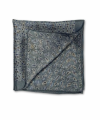
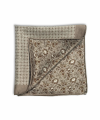
Green, Blue, Brown and White Floral and Paisley Double Sided Pocket Square
$69


Custom Tailoring After Weight Loss in NYC
For a long time, tailoring moved at the same pace as life.
Weight crept on. Weight came off. A jacket was let out, a trouser taken in. These things happened slowly enough that wardrobes absorbed them without much disruption. Adjustments were part of the background.
Lately, that’s no longer true.
Over the past two years, something has shifted among a very specific group of men in New York—people who don’t “wear suits” so much as rely on them. Bankers, attorneys, executives. Men whose clothes aren’t aspirational objects but daily equipment.
They aren’t showing up with one piece that feels off. They’re showing up with garment bags. Whole wardrobes. Twenty custom suits. Thirty pairs of trousers. Shirts that once closed cleanly now collapse on slimmer frames.
The clothes haven’t aged. The bodies moved on.
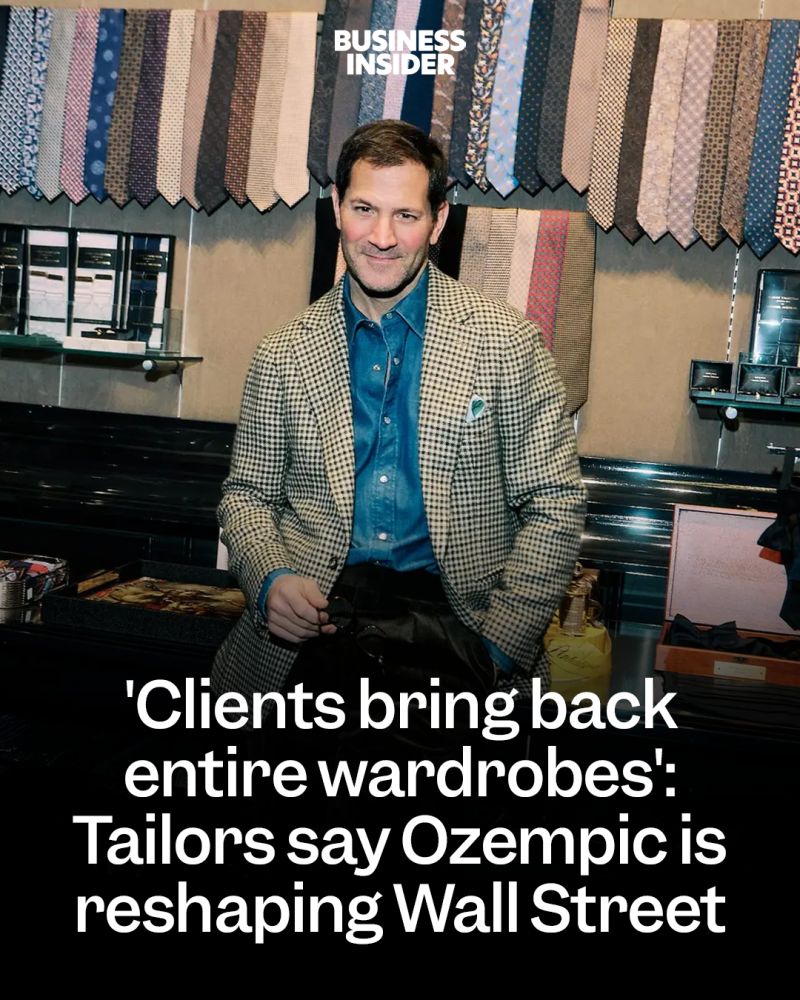
We were interviewed for a recent article in Business Insider that gave language to what many tailors have been seeing quietly for some time. The reporting focused on weight loss. The more interesting story sits one layer underneath, where fit stops being technical and starts becoming personal.
What Tailors Are Seeing in NYC Alteration Rooms
You can tell a lot about a moment by what happens in an alteration room.
For years, the balance was predictable. For every garment that needed to come in, another would need to go out. Bodies fluctuate. Life intervenes. Tailors adjust.
That balance has broken.
By last year, the ratio wasn’t close. For every suit that needed to be let out, more than ten were being taken in. These weren’t minor tweaks. They were structural changes—jackets reshaped, trousers rebuilt, silhouettes reconsidered.
This wasn’t fashion doing what fashion does. No trend cycle explains it. No seasonal shift accounts for the volume.
Bodies were changing faster than clothes were ever designed to respond.
When Weight Loss Turns Into a Fit Problem
Weight loss has a way of removing ambiguity.
Clients don’t hedge when they come back in. They don’t ask if something feels off. They know. The mirror tells them. The clothes confirm it.
There’s a difference between a garment being tight and a garment being wrong. When weight drops quickly, that difference becomes obvious. Proportion slips. Balance disappears. A jacket doesn’t just feel big—it stops behaving the way it once did.
This is where tailoring stops being about measurements and starts being about judgment.
Making something smaller is easy. Making it right again is not.
Dressing a Changed Body Without Changing Who You Are
What’s notable is what isn’t happening.
People aren’t asking to look sharper than before. They aren’t chasing slimmer cuts or new identities. No one is trying to announce a transformation.
They want their clothes to feel like themselves again.
That’s harder than it sounds.
A body changes, but posture doesn’t overnight. A man still moves the same way. Carries himself the same way. Occupies space the same way. Good tailoring accounts for that. Bad tailoring erases it.
The goal isn’t to make the body look smaller. It’s to make the clothing make sense again.
When the Tailor Is Also the Case Study
There’s no distance between this moment and the people doing the work.
Michael went through it himself. Roughly twenty pounds gone. Eighty pairs of trousers back on the table. The experience didn’t reveal something new so much as sharpen something familiar.
Bodies are moving faster now. Clothing has to answer in real time.
That doesn’t make bespoke tailoring obsolete. It makes it necessary.
Why Considered Custom Tailoring Matters Now
This isn’t about slimmer bodies becoming desirable or some cultural mandate to change. It’s about pace.
What used to take years now happens in months, sometimes faster than a wardrobe can keep up. When that happens, the difference between buying clothes and having a tailor becomes obvious.
Not because something needs to be fixed, but because someone needs to think.
Someone has to decide what stays, what shifts, and what still feels like you.
That’s the work. Quiet. Unflashy. Often invisible.
And it’s why the most valuable tailor isn’t the loudest, the quickest, or the most reactive—but the one who takes the time to consider what shouldn’t change, even when everything else does.
In the Press
Business Insider on Weight Loss and Wall Street Wardrobes
A recent Business Insider feature examined how rapid weight loss is reshaping the wardrobes of New York professionals, with tailors reporting an increase in large-scale alterations as clients return with entire closets needing adjustment.
The article focuses on the scale. What it hints at—without fully unpacking—is what happens afterward, when clothing has to catch up to a body that moved faster than expected. That’s where tailoring stops being transactional and starts becoming something closer to a long-term relationship.
Frequently Asked Questions About Custom Tailoring After Weight Loss
Should I alter my existing suits or start over after weight loss?
It depends on the original construction and how much your proportions have shifted. Well-made garments often have more life in them than people expect. Others are better used as reference points for what comes next.
How much weight loss usually requires tailoring?
There’s no fixed number. Five pounds can change how a jacket sits on one person and do almost nothing on another. The issue isn’t weight—it’s balance.
Can bespoke tailoring accommodate future body changes?
That’s one of the reasons bespoke exists. Thoughtful construction allows garments to evolve over time without losing their integrity.
Is custom tailoring worth it if my weight might change again?
If change is ongoing, having a long-term relationship with a tailor matters more than any single garment. The value isn’t just in the clothes—it’s in continuity.
How do I know if my clothes no longer fit correctly?
When something stops feeling neutral. When you’re adjusting instead of forgetting you’re wearing it. Fit problems announce themselves quietly at first.